

Odds Are The New Oracle: Decoding the Rise of Prediction Markets
How probability is evolving from math to cultural infrastructure.

Each issue of Codex, written by a different member of the TRIPTK team, digs into the ephemera, artifacts, case studies, and conversations most interesting to them at the moment.
It’s for readers who want to give more to culture: to contribute vs. appropriate, embed vs. watch from afar, lead vs. follow. Join us for the ride.


For over 1,000 years, the Oracle of Delphi was the most famous prophetic site in Ancient Greece. Important people would travel from far and wide to visit a priestess named Pythia for cryptic and poetic utterances about the future.
King Croesus of Lydia asked the Oracle if he should attack the Persian Empire, to which she replied that if he did, “A great empire would fall”. Croesus, encouraged by this prediction, attacked Persia, lost the war, and the Lydian Empire crumbled. Thanks a lot, Oracle.
Relying on a clear interpretation of the future is encoded into human nature and has persisted from Ancient Greece to today.
Just weeks ago at the 2026 Golden Globes, a small graphic appeared on the screen giving the odds of each nominee winning before each award was announced. By the end of the night, those odds, generated by thousands of people trading on Polymarket, had correctly predicted 26 out of 28 awards.
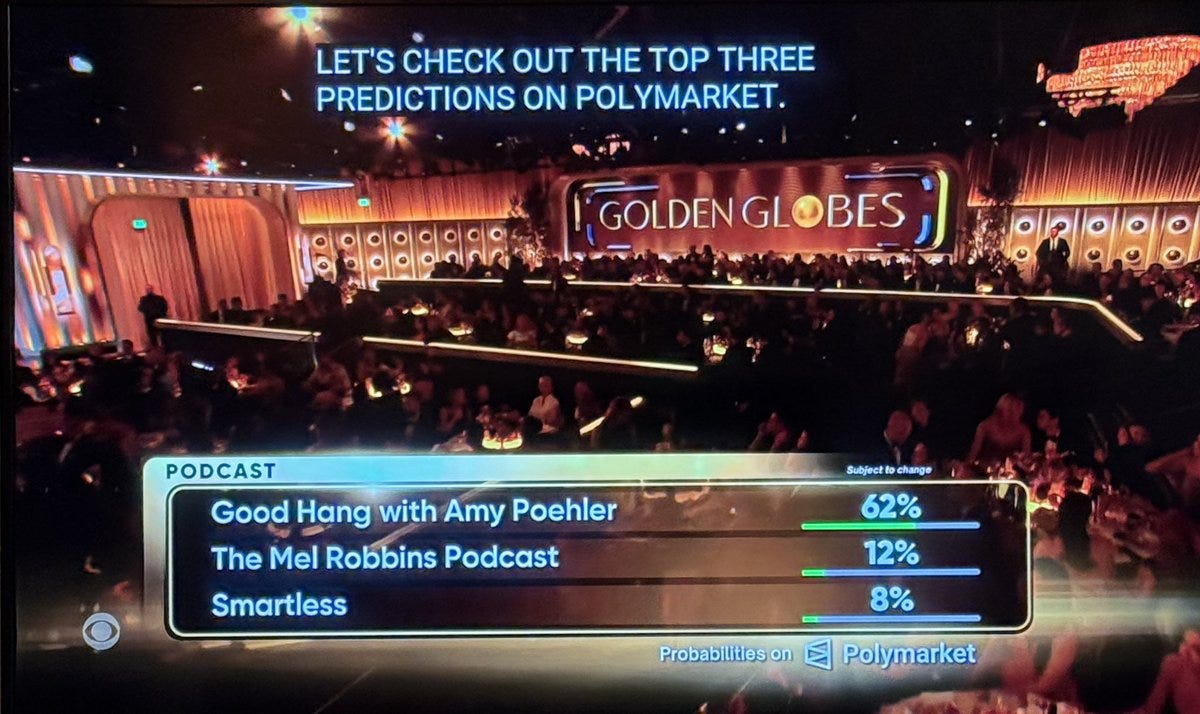
This wasn’t a fluke. Independent analysis shows that one month before an event, Polymarket is 91.9% accurate. Four hours before, it’s 95.4% accurate.
Today, there is a new type of Oracle, offering a new source of truth in a world that has an ever-loosening grip on its understanding of the future.
The Golden Globes offered three glimpses into the near future:
The understanding that these market odds are accurate will be commonplace
These odds will become an increasing part of the news and information architecture of our lives
That they will influence how we interpret what next, and perhaps even shape it
We need someone, or something, to help us understand the future with a higher degree of certainty than we can on our own. Prediction Markets are the newest manifestation of this timeless human need and will begin to shape how we interpret the future.
Decoding the Cultural Pull of Prediction Markets
The Prediction Market boom has arrived at a time when there is a need for a more reliable predictive signal than the Co—Star app and annual In/Out lists.
Leading this wave are Polymarket and Kalshi, launched in 2020 and 2021, respectively. After leaping regulatory hurdles, these two platforms now capture the vast majority of the $28B prediction market. Given the level of capital invested in both platforms and the cultural response, it’s reasonable to assert that we’re early in this phenomenon.
These products are appealing for three main reasons:
People love to gamble
People can now gamble on novel world and cultural events, like “Who Will Win Best Album At The 2026 Grammy Awards”, “Will Donald Trump say ‘Biden’ +10 times during his State of the Union address?”, and “When will the U.S. strike Iran?”
Prediction Market odds are increasingly being seen as a reliable indicator of a future outcome
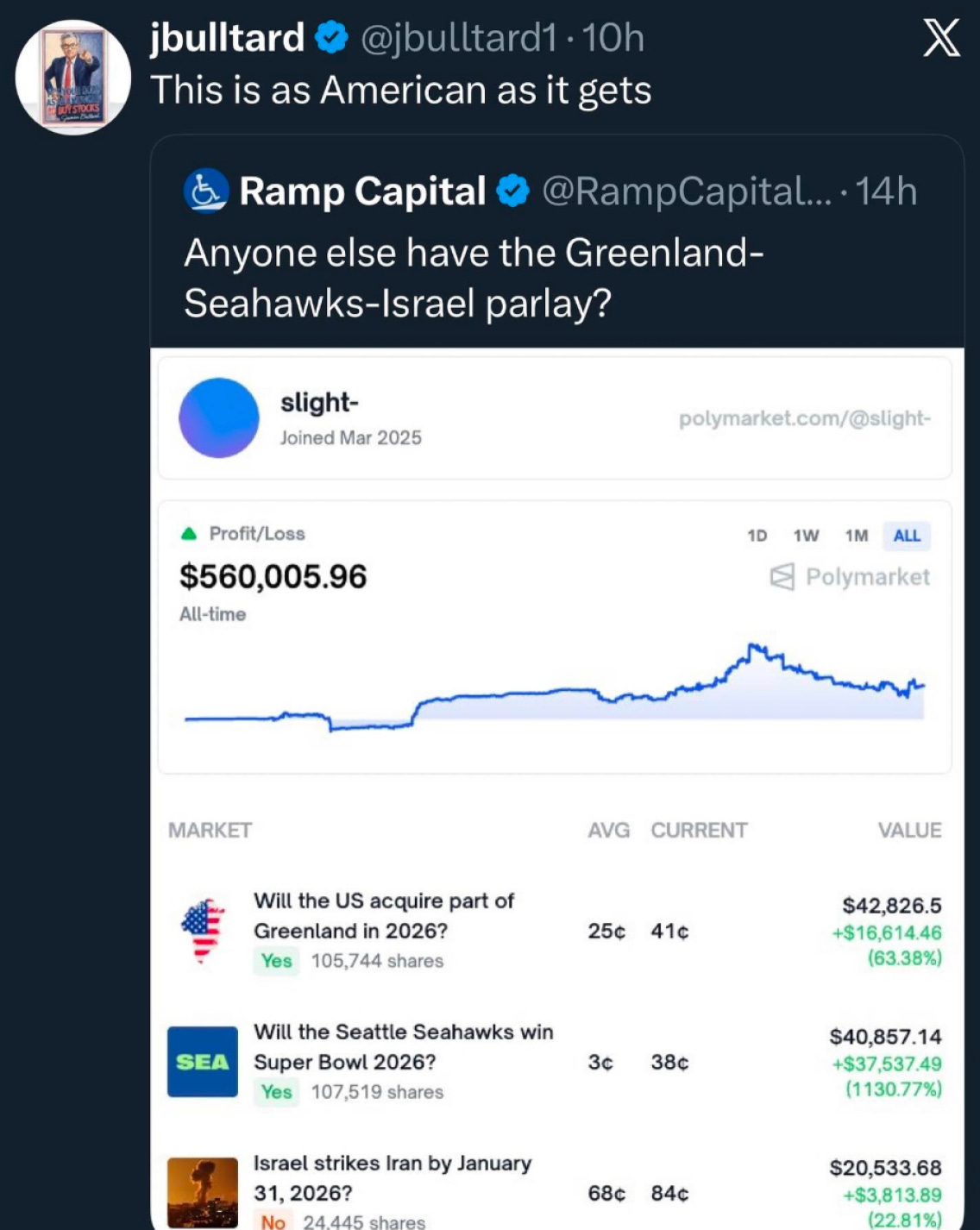
The tools of understanding the outcomes of the future we’ve relied on for so long are no longer fit for the world we live in because our world is exceedingly unpredictable. If it feels like we live in crazy times where future outcomes feel more uncertain than ever, it’s because we do.
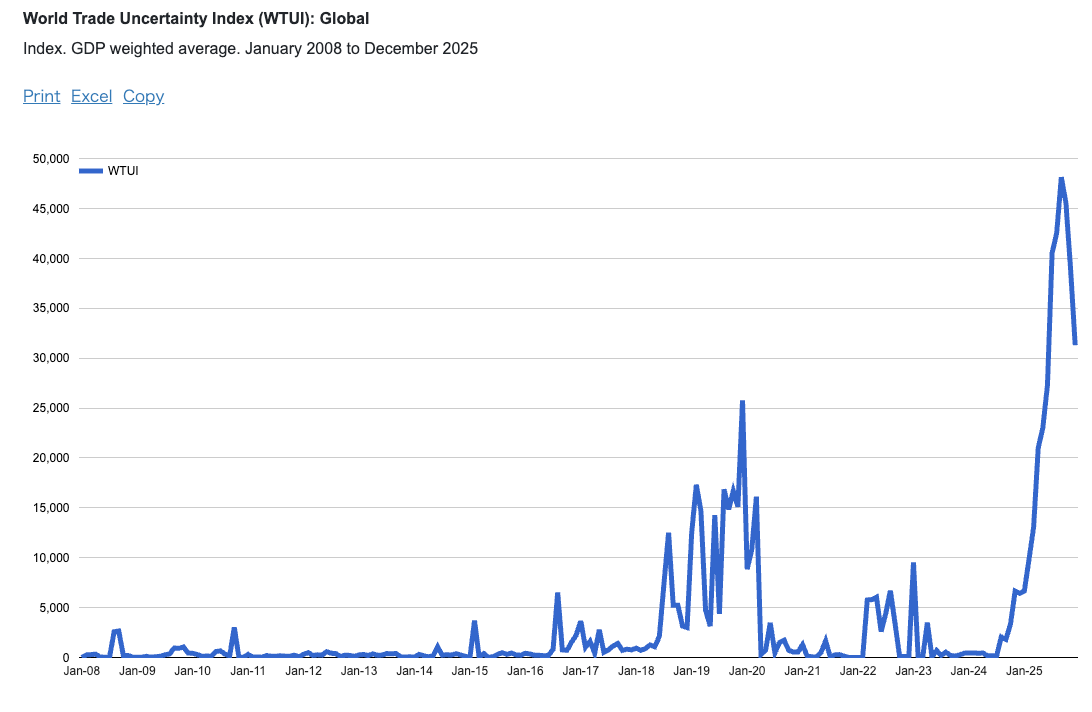
The forecasting tools we already have are breaking down in front of us. Political polls missed the 2024 presidential election by a historic margin. In 2021, the Fed and other major banks predicted inflation would be “transitory” and correct by 2022.
Each week, it feels like something unprecedented happens. How can we have confidence in what the future holds when it breaks the pattern of what has already happened? We need new signals and tools to understand what will happen next.
In prediction markets, if new information appears, people trade on it, pushing prices up or down as beliefs change. Because traders have skin in the game, the market aggregates many dispersed opinions into a single, continuously updated forecast.
The fundamental principle that underpins the accuracy of prediction markets—The Wisdom of the Crowds—tends to be reliable more often than it isn’t. Modern prediction markets are different from the methods we’ve historically relied on because:
Expert forecasts are published once; odds are real-time and continuous
Analysis is participatory rather than exclusive; anyone can move the signal
They are pre-formatted for our measurement-obsessed dashboard culture. The clean percentages are screenshot-ready for all platforms and group chats
Institutional trust is low, but perhaps we can trust our fellow citizens who have skin in the game
The big picture is less about gambling and more about the odds as a tool for understanding the probability of future outcomes. The folks with the big bucks know this. Eye-watering amounts of capital are being invested in the usage and normalization of prediction market odds as a source of truth, and it’s working.

Polymarket has partnerships with Dow Jones & Bloomberg to integrate their data as signals for investors, providing greater confidence in their investments. Kalshi has partnerships with CNBC and CNN to integrate real-time odds into their TV and online coverage as a news ticker.
Yes, more gambling forced upon us is dystopic.
But in an age of misinformation, AI slop, propaganda, and geopolitical posturing, there should be some comfort found in having a data signal that is democratic, crowd-sourced, and reliable. These odds can be manipulated through huge bets, but on a liquid market, that’s a costly psy-op.
It remains to be seen if the odds themselves will be a tool for good or bad, but people with a lot of money are doing their best to transform them from novelty to norm. And they will likely succeed.
Recoding Probability as a Shared Language
Perhaps this new oracular signal is the perfect antidote for a culture whose only organizing logic is chaos and whose only worthy barometer is vibes.
In the same way that in a conversation with friends, someone may refer to the number of Instagram followers a person has as an indication of their level of fame, in the near future, we will be using prediction market odds as a measure of how likely something is to happen. It will become social shorthand. So what could it look like?
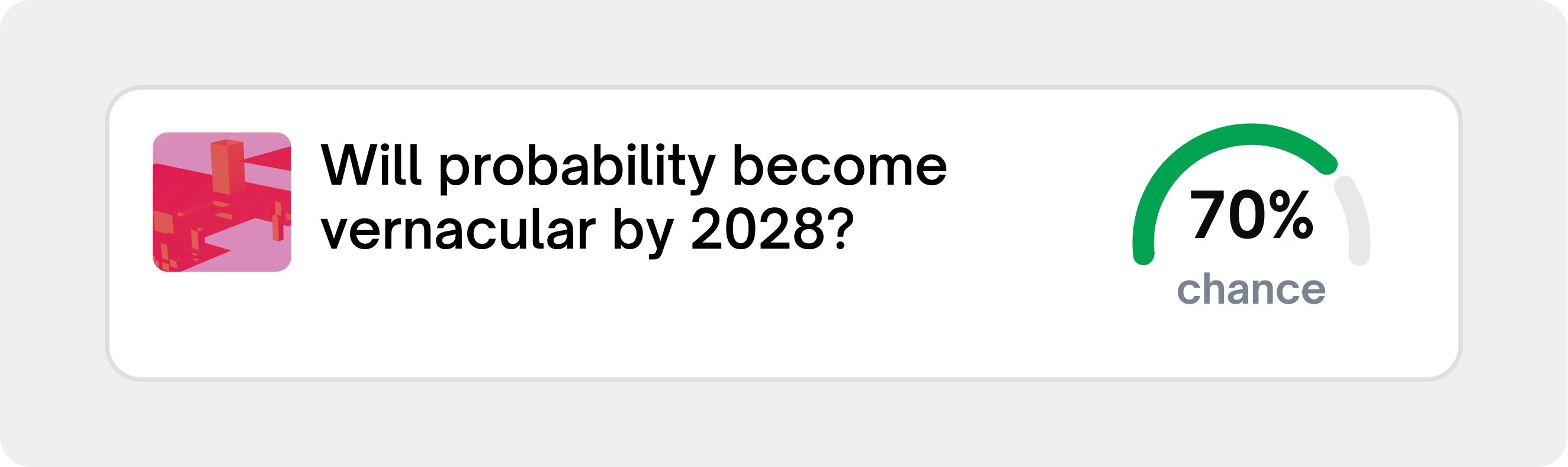
Prediction 01: Probability becomes vernacular
The way we talk will be a sure sign we’ve arrived at a prediction-oriented world. Our conversations will naturally shift from binary assertions to probabilistic hedging.
A college student texts their friend, “I’ll come to the party, but the odds of me bailing early are 60/40.”
Thanksgiving dinner with your conservative uncle will shift from passive-aggressive remarks about whether Trump will be impeached to a probabilistic debate: “Kalshi has it at 33%, do you really think it’s lower than that?”
Sports commentators pre-game: “Vegas has them at 65%, but Polymarket is at 58%. What do the people know that Vegas doesn’t?”
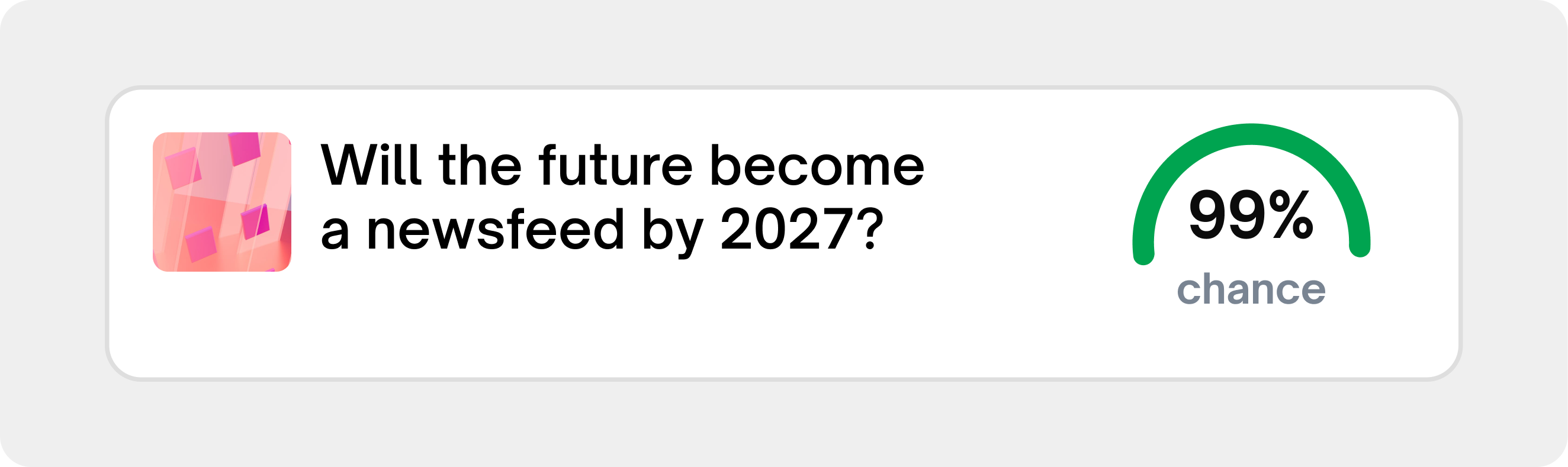
Prediction 02: The future becomes a feed
Real-time probability scores for an event occurring are the perfect measure of compressed meaning for our fast-moving news cycle. So prediction market odds will be embedded in our information infrastructure in the same way that stock tickers and weather forecasts are now—constantly visible and updating.
News chryons to include odds shifts as news stories unfold: “Greenland Invasion Odds: 21% ↓ 11pts after Trump’s Davos Speech.”
Your AI news curation app will notify you: “Good Morning. NVIDIA Stock is up 3%, it’s 72° and sunny, and chances of a government shutdown dropped 8 points overnight.”
Political junkies look at Polymarket odds mid-debate the same way sports fans look at ESPN mid-game
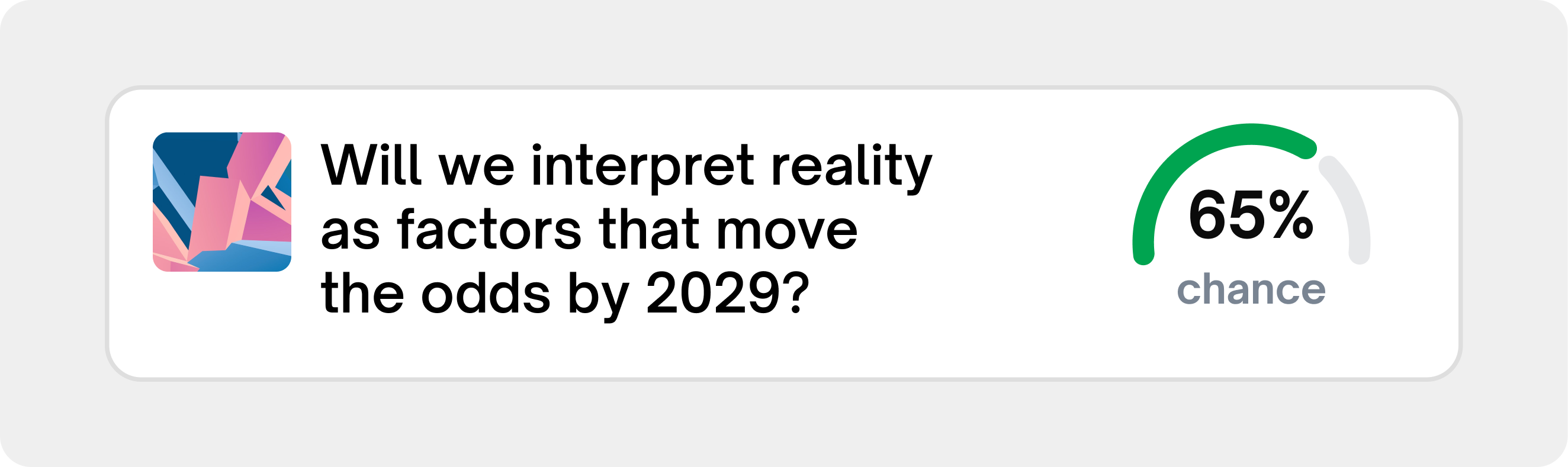
Prediction 03: Reality is just “factors that move the odds.”
Once probability becomes infrastructure, we stop evaluating events on their own merits and start asking: ‘How did the market respond?’
A politician gives a major policy speech. The next morning’s analysis isn’t about the policy details, it’s: “Newsome’s education plan moved his 2028 Election Winning odds up 4 points, but dropped his odds of winning independents by 2.”
A celebrity posts a cryptic Instagram story. Pop culture blogs don’t speculate on meaning; they report: “Odds of Hailey and Justin’s divorce jumped from 15% to 28% in 6 hours following the post.”
Sam Altman tweets something vaguely concerning about AI safety. Within minutes, Discord servers and group chats aren’t debating what he meant; they’re screenshotting: “AGI by 2027 just moved from 34% to 41%, he knows something.” The odds movement becomes proof of hidden knowledge, regardless of what was actually said.
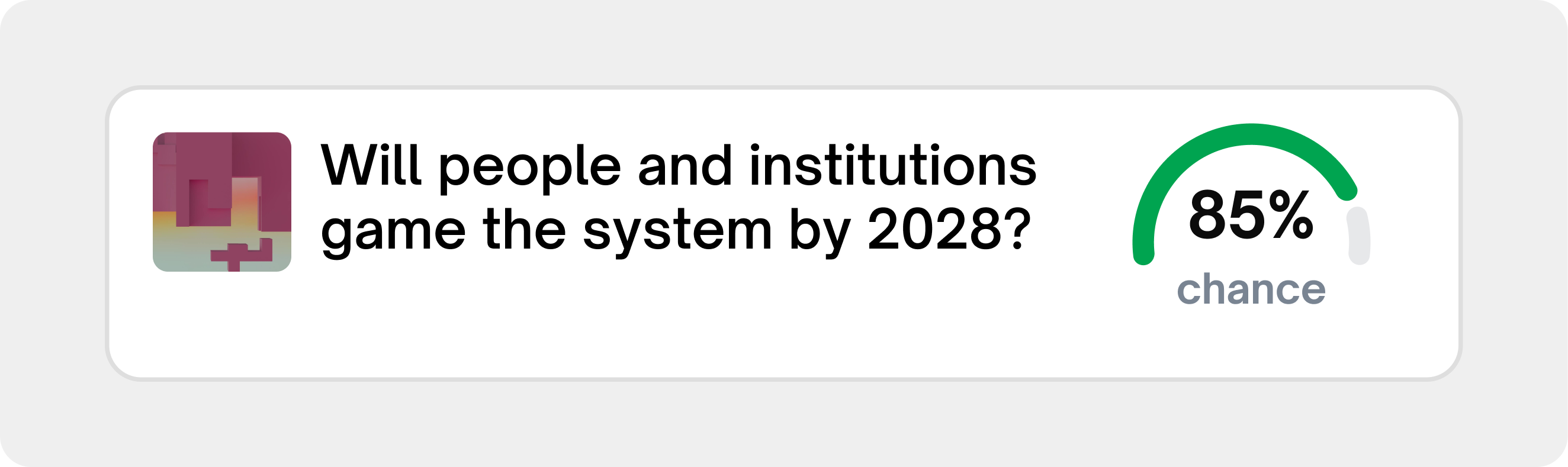
Prediction 04: People and institutions will game the prediction system
If prediction market odds shape our understanding of reality, then it’s inevitable that the odds will become a tool to manipulate reality itself. Narrative warfare and grifting through strategic bets on markets.
A flailing political campaign takes $5M in donor money and dumps it into Polymarket to pump their candidate’s odds from 8% to 18%. The media covers “surging odds” as news, creating real momentum. The odds manipulation becomes the campaign strategy
Short-sellers don’t just short a stock; they place large bets on prediction markets that the CEO will be ousted, the stock will tank, or bad news will drop, then leak info to journalists. The prediction market position is both a bet and a weapon
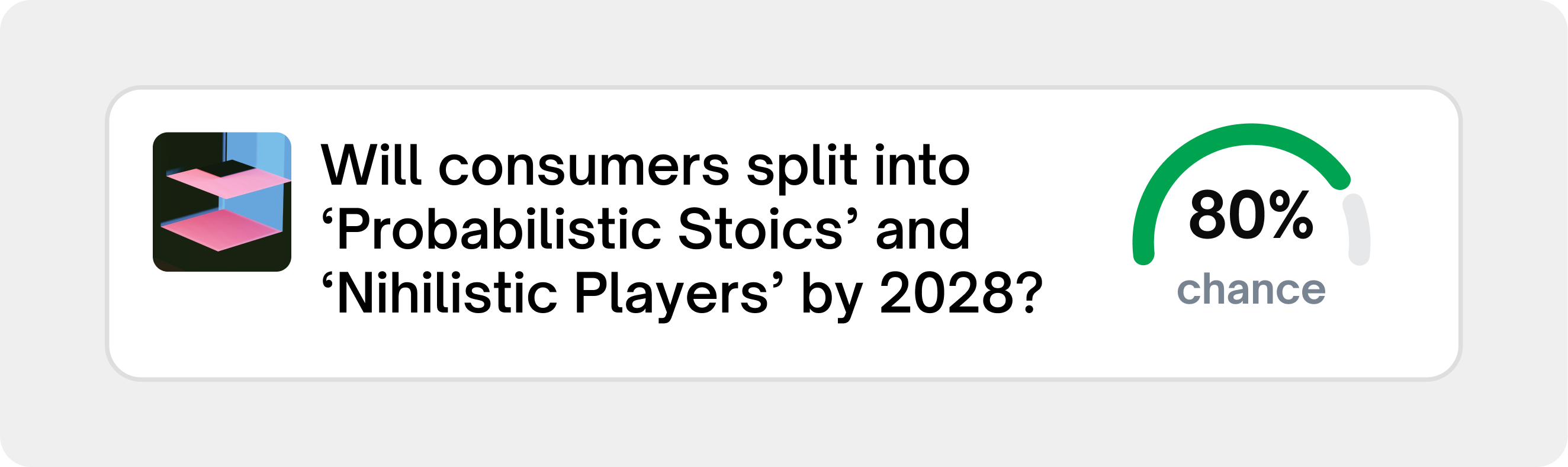
Prediction 05: Risk splits into two consumer temperaments
In the spirit of thinking in multiple possible futures, it would be limiting to think that people will respond to this new world in the same way.
Probabilistic stoics: use probabilities for emotional regulation and planning.
“The Fed is very likely to cut rates again; this is a recession indicator, so I’d better shop at Trader Joe’s, not Wholefoods for the rest of the year.”
Before asking for a raise, they check Polymarket odds on company layoffs, industry health metrics, and economic soft landing probability to optimize timing
Nihilistic players: treat uncertainty as entertainment (stakes, spectacle, participation).
“The future is chaos, so I’m going to YOLO on many Tweets Elon makes this month. Diamond Hands!”
They’ll gamify their own lives between friends. “I’ve got 80% Yes / 20% no that Timmy gets married first in the group. Who wants that action?”
Today’s Oracle is different; it speaks in percentages, not riddles.
But there is one timeless principle that remains: our interpretation of the future shapes how we behave in the present. After all, despite the unhelpfully cryptic prophecy foretold to King Croesus, this interpretation of the future was the signal he used to inform his decision.
While most people don’t have the power or resources to influence the outcome of a market, they do have the agency to act differently in their own lives to account for these potential futures. So the question becomes, what do we lose when uncertainty is compressed to a percentage?
What happens to intuition, conviction, and the sense of energizing hope that comes from believing in a dream — when Polymarket says it only an 8% chance of happening?

Worthy recommendations from Nick Hartland
Each issue, we share a series of recommendations from our team – both cultural artifacts (podcasts, books, essays, movies, playlists) and more philosophical pursuits (questions, processes, advice).
Book? The Anatomy of Genres by John Truby.
I’m not a screenwriter, but I like to read screenwriting books. Every genre asks different questions of human nature, so while this is about film genres, it’s also about why people like certain types of stories and themes and why they stick around.
Music? Geese
Despite the generational hype, the memes, and the nepo-baby accusations, I love Geese. Getting Killed is a masterpiece, and playing Trinidad on SNL was a hilarious choice, given their catalogue.
Advice? Slow down and look around
Pick one thing out in the world—literally any common physical thing—notice it everywhere and focus on it, and it will become interesting. (The Art of Noticing).

Links shared this month in Slack / over text / in decks
A Social Network for A.I. Bots Only. No Humans Allowed: “As Moltbook gained steam on Friday afternoon, Andrej Karpathy, one of the founding researchers at OpenAI and the former head of self-driving technology at Tesla, described it as “genuinely the most incredible sci-fi takeoff-adjacent thing I have seen recently.”
The Adolescence of Technology: “To be clear, I believe if we act decisively and carefully, the risks can be overcome—I would even say our odds are good. And there’s a hugely better world on the other side of it. But we need to understand that this is a serious civilizational challenge.”
Everything Is Television: “A spooky convergence is happening in media. Everything that is not already television is turning into television.”
Not just ‘A F**king Magazine’: The unexpected renaissance of corporate publications: ‘‘We’re interested in belief change.’ For Dayo Lamolo, who spearheaded the launch of Nothing Personal [for Mozilla], the goal was to start a conversation around digital privacy and ethics.”
In the age of AI, organizations will need partners who can help them ask the right questions, cut through dominant narratives and legacy orthodoxies, and exercise judgment about what truly matters. The stakes of making the wrong decision will be higher than ever, and the ability to generate conviction (e.g. clarity about what to do and why) will become a critical constraint on progress.
At TRIPTK, we have evolved and expanded our offering to remove friction, lower the cost of misdirected effort, and create conviction around high stakes decisions.
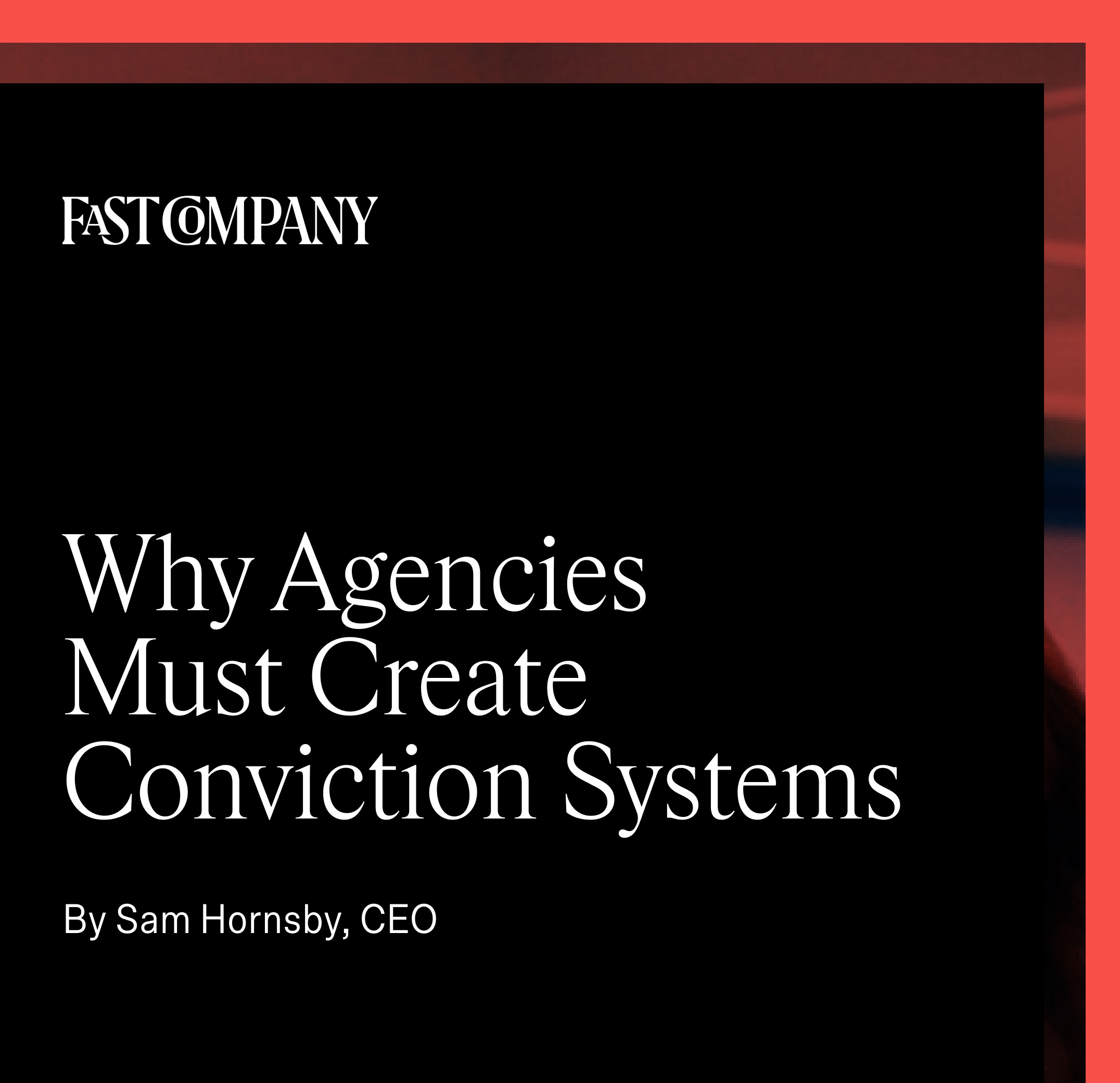
Read the latest article from Sam Hornsby, CEO & Founder, “Why agencies must create conviction systems” in Fast Company to dig deeper into our POV on creating successful agency-client partnerships.
About TRIPTK & Codex
TRIPTK is a brand & innovation consultancy. We partner with leaders to decode and recode critical cultural shifts, creating brand value for today and tomorrow.
Codex is a monthly newsletter sharing the TRIPTK perspective. It’s for readers who want to give more to culture: to contribute vs. appropriate, embed vs. watch from afar, lead vs. follow.
Any outsized opinions expressed here are solely the authors and do not represent the opinion of the company. If you like this newsletter, consider subscribing – or sharing with others who might enjoy it. Feel free to comment, email, say hey, and/or send us things to read.

🔮🔮🔮